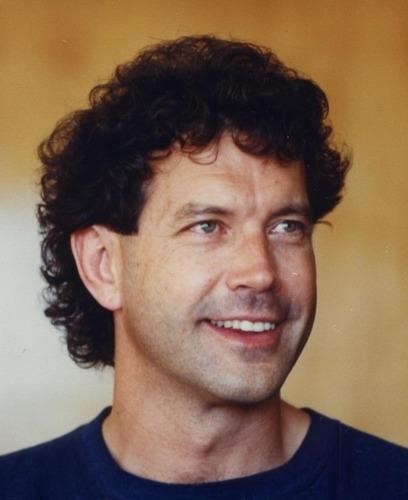
Salt Lake City, UT - Leonard (Len) Clyde Hawes, PhD, died March 4, 2026. He was 81 years old and had been dealing with the aftereffects of several strokes in his later years.
He was the son of Clyde Hawes, a blacksmith and ferrier, and Fairy Mead Hawes, an elementary school teacher. He had a younger brother, Jack, who was born six years after Len. His family lived at the edge of one of Minnesota's beautiful green lakes in a small rural town that had one stop sign on its Main Street in the 1940s.
A few years ago I (Michelle) asked Len in a casual conversation what he would like in his obituary. As a university professor he had a long list of publications, conference presentations, research grants, and service positions in the Communication Department and the University of Utah. So, I was surprised when he said he wasn't as interested in his career and academic life as he was about his memories of his time spent on a Minnesota farm every summer in his early childhood through his high school years.
Beginning from the time he was 5, he spent all summer on a nearby farm where his mother, who was orphaned as a child, had been in foster care as a teenager. She spent her summers earning a teaching degree from a Branch Normal program while he lived with his informally adopted grandparents, the Utleys, on their farm. He regarded the farm as his second home.
The farm was an idyllic place for a youngster. He spent his days in the sun doing work that he didn't consider work at all. As a child he was assigned to bottle-feed the new lambs in May and see to the new flocks of chickens and geese. He gathered eggs, churned butter, and planted a large kitchen garden next to the barn where he pitched hay. He remembers picking warm tomatoes off the vines in the garden to snack on and eating fresh watermelon for dessert. His informally adopted grandmother, Jenny, was an excellent cook and called Len to come in the kitchen as the new loaves of bread and cinnamon buns came fresh out of the oven.
When he first came to the farm, he learned how to hitch a team of horses to planting and harvesting equipment. As the first tractors came off assembly lines after World War II in the 1950s, he moved on to learn how to operate gas powered equipment. He learned how to fully operate a John Deere Model D tractor by the time he was 13.
In his advanced years, he bragged that, if needed, he could still hitch up a team of horses, or drive a tractor to work in the grain fields. He was the only person I have ever known who would drive out of his way through the Midwest looking for museums of antique farm equipment and who could happily explain at length how to use each of them. While he said he couldn't shoe horses like his father, he knew how to harvest grain with a scythe and how to sharpen the blade.
He was awarded a Bachelor's degree from Macalester College in 1966 and went on to earn graduate degrees from the University of Minnesota. He won a national dissertation award in 1970, the year he graduated with a Ph.D. His first faculty appointment was at Ohio State. He came to the University of Utah Department of Communication in 1978.
Len's areas of research and publication were in conversation analysis, dialog, social justice, and conflict resolution. He won a Distinguished Teaching Award in 2003, and he retired in 2018 as Professor Emeritus in the Department of Communication at the University of Utah.
He and Michelle jointly won the Peacekeeper Award from the Utah Council on Conflict Resolution. With Rick Rieke, a fellow faculty member, they established the Conflict Resolution Graduate Certificate Program in the Communication Institute at the University of Utah.
Len married Michelle Moench in 1985 and became the stepfather to her four sons. After Len's father died when Len was young and his mother remarried, Len was raised in a stepfamily. He knew that stepfamilies face their own challenges. Nevertheless, we managed to create a good family life and Len was a supportive and gracious dad to a bunch of young boys.
Len loved classrooms and held that they are places to grow ideas and develop intellectual maturity. From the time he was young he loved the energy and opportunity of classrooms both as a student and as a professor.
He loved The Great Outdoors and sunny days doing anything outside including horseback riding with friends in the Uintas, long morning bicycle rides, hiking the Wasatch, tennis, swimming in lakes and taking noon naps in the direct sun. He never turned down an opportunity for long road trips in southwestern deserts and northern forests.
He loved long conversations with smart and well-read colleagues and friends on any topic. He was a member of a national champion debate team in college and over the years he never lost his willingness to engage in debate with anyone. He had strong political opinions and wasn't hesitant to express them.
He never lost his love of big farmhand breakfasts, day or night, and any food that included bacon. He had a treasured collection of fountain pens, Stetson hats, wool coats and cowboy boots. He enjoyed attending the Utah Symphony and, at the same time, he had a particular fondness for the rock band, Little Feat.
If he had a happy place outside of his home it was in bookstores, any bookstore, anywhere. He never left a bookstore empty handed. At the time of his death he had well over one thousand books stashed around the house.
Len is survived by wife of forty years, Michelle, and his four step-sons, Miles Egan, Adler Egan, Austin Egan and Marcus Egan, and by his nephew B.J. Ahern and his niece Cortney Renton. A special thanks goes to Linda and Ralph Gehrke, his step-sister and her husband, for their years of generous and kind support of Len and Jack.
At Len's direction there will be no memorial service. He had a particular dislike of funerals and didn't want one for himself. His ashes will be buried next to those of his father and brother in his boyhood town cemetery in Minnesota.
It's more than a great relief that he will miss having to deal with artificial intelligence. If he were still teaching in university classrooms, he would require that students take their essays and exams writing out their answers in long hand during class time.
We will miss him every sunny day, every time we sit down to a huge breakfast, every time we wander around in a bookstore, and every time we put on a warm wool coat in the winter.